How Much Does Esports Production Cost? (2026 Pricing Guide)

· 7 min read
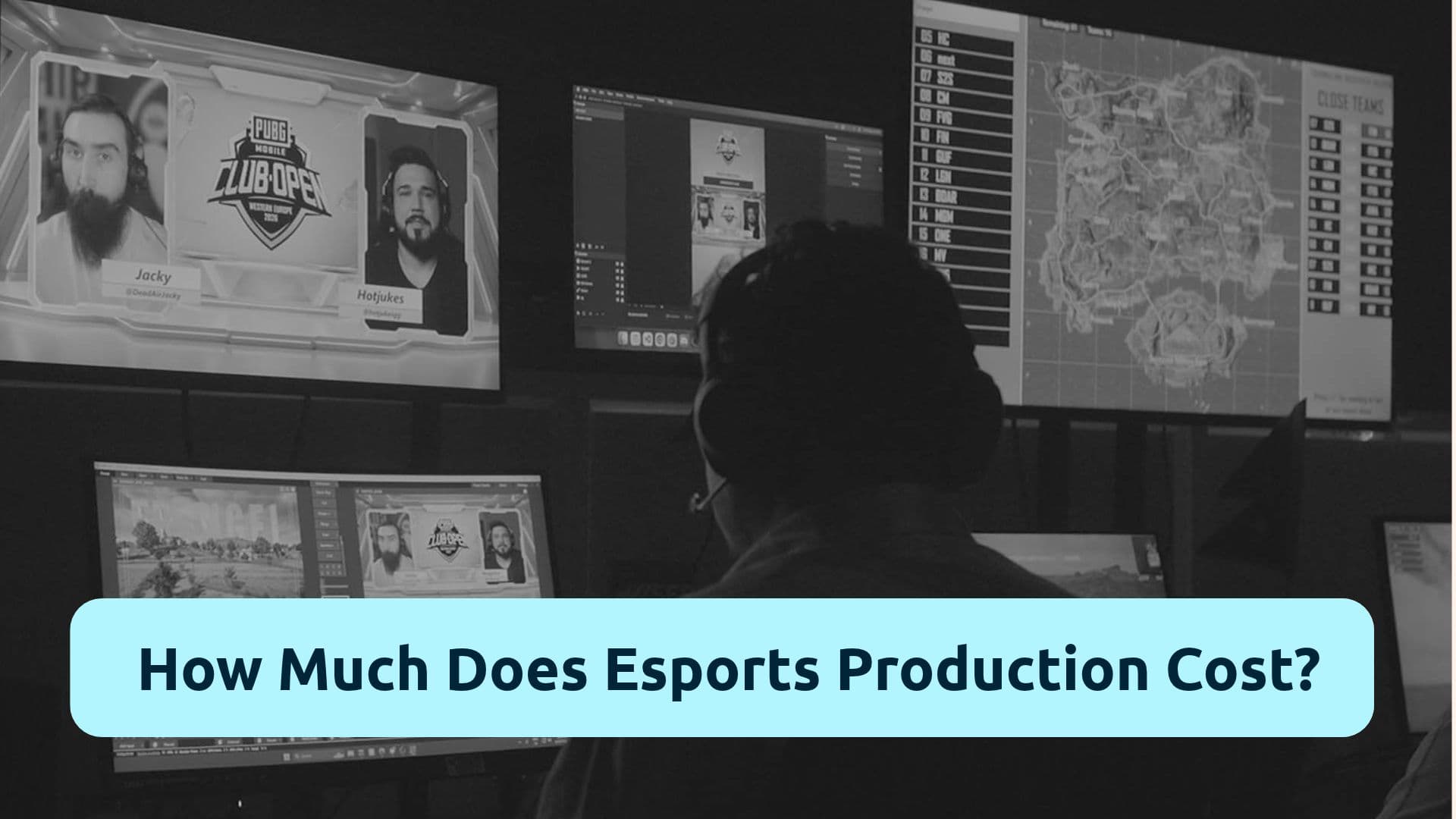
Esports production costs anywhere from $200 for a small community show to $1,000-3,000 per day for a regional tournament, and more once you add a full LAN with a big venue. The final number depends on your game, your format, your scale and how much broadcast design you need.
We're Wiser Esports, a production company based in Kathmandu. Since 2022 we've produced and broadcast 250+ events for publishers, tournament organizers and brands across Asia, the Middle East, Africa and Europe. The prices below come from real quotes we've sent, not from a calculator.
Esports Production Cost at a Glance
Event type | Typical length | Starting price |
|---|---|---|
Community tournament | 3-5 hours | $200-400 |
Mid-size tournament | 3-6 hours | $500-700 |
Regional tournament | Full day | $1,000-3,000 per day |
Basic broadcast graphics (non-3D) | One-time design | From $100-200 |
There's no hidden fee in these prices. Every package includes up to three rehearsals, such as a dry run and a tech test. Custom graphics are the only extra, and only if you ask for them.
Treat these numbers as starting points. A 3D graphics package, extra languages or a bigger crew will move the price, and we'll tell you exactly how before you book. We're based in Kathmandu and produce remotely, which keeps travel and on-site costs out of your quote.
What Decides the Price of Esports Production?
Five things drive almost every quote we write.
1. The game title
Every game needs a different show. Some need one observer and a simple overlay. Others need a full replay team.
Valorant and CS2 depend heavily on the observer and the producer, because rounds are fast and the action moves between players constantly. That means more skill on the crew and a higher price. League of Legends needs very experienced observers too, so it sits near the top of the range. A full Valorant or CS2 broadcast can need a replay operator, a graphics operator, a cinematic observer, a POV observer, a producer and an in-game director, and every extra role adds to the quote.
Mobile titles like PUBG Mobile and Mobile Legends usually cost less to produce, since the workflow is more standardized. They're also a big part of our work: we've produced 250+ PUBG Mobile tournaments, and you can read more on our PUBG Mobile tournament production page.
2. Event format: online, LAN or hybrid
This is the biggest price lever. An online event needs a crew, a stable internet connection and good software. A LAN needs cameras, audio, switchers, cabling, a venue plan and people on site.
In our experience, a LAN usually costs 2-3 times more than the same event online. The hardware is the main reason.
3. Production requirements
How many casters? Do you want a pre-show, a replay desk, interviews, stat integration? Each layer adds crew hours.
4. Scale
A four-hour community cup and a three-day regional final are different jobs. More teams, more matches, more days and more languages all increase the cost.
5. Broadcast assets
Overlays, scoreboards, lower thirds and animated transitions all need to be designed and tested. Basic 2D graphics start at about $100-200. Custom 3D work costs more. If you already have a graphics set, tell us. It can bring your quote down.
What You're Paying For: The Production Crew
A big share of any esports budget goes to people, not equipment. A typical show needs:
Producer: runs the schedule and keeps everyone on time.
Director: calls the shots and switches between feeds and game scenes.
Observer: controls what the viewer sees in the game. Fast games need stronger observers.
Graphics operator: runs overlays, scores and lower thirds live.
Audio and stream engineer: keeps the sound clean and the stream stable.
On smaller shows, one person can cover more than one role. On bigger shows, each role gets its own person, and the quote grows with the team.
What Makes a Quote Go Up (or Down)
These push the price up:
Short notice, which means rush work
Multi-language broadcasts
Long broadcast hours
3D or fully custom graphics
A LAN with complex venue or audio needs
These bring it down:
Booking early
A simple single-stream show
Reusing graphics you already have
Running the event online or hybrid
Working with the same production team for several events
Online vs LAN vs Hybrid: What's the Difference?
Online events are the cheapest. Everyone plays from home, and the show is produced remotely.
LAN events put players and a crowd in one venue. You pay for equipment, travel, setup and more crew.
Hybrid events mix the two. Part of the production happens on site and part happens remotely. This is the option most organizers overlook, and it can save a lot of money.
How We Cut a LAN Event's Production Cost by 40%
One of our clients, a tournament organizer in Iraq, had planned a fully on-site production for a LAN event. The budget was tight, and a full crew and equipment package was out of reach.
We suggested a hybrid setup instead. Their team handled only the basics at the venue: a caster and host camera with audio, and three venue cameras. Everything else happened in our studio.
They sent us the caster and host camera feed, plus the venue cameras with audio.
We handled the venue cameras, caster and audio mix on our side.
We added the game feed, mixed the full show and broadcast it live to their social channels.
We also sent a real-time SRT feed back to their venue, so the screens in the hall showed the same polished broadcast.
(SRT is a video transport protocol built for unreliable networks. It keeps the picture stable when the internet connection isn't perfect.)
The event ran as two days online and one small LAN day. The organizer saved around 40% compared with a full on-site production.
Remote production works because you remove the biggest costs: flights, hotels, shipping gear and a large crew on site. In our experience, a well-planned remote or hybrid setup saves 30-50%. The catch is planning. Your local team and our remote team need clear roles, a tested connection and a rehearsal before show day. Without that, the savings disappear.
The Biggest Mistakes Organizers Make When Budgeting
Choosing a production company on price alone
The cheapest quote is rarely the cheapest event. Before you sign, ask:
How big is the crew, and who does what?
What hardware will you use?
What's the backup plan if the internet fails mid-match?
Is there any fee that isn't in this quote?
A good company answers these without hesitating. If they can't, that's your answer.
Not asking for proof of work
Ask for past events, links and references. A company that has produced real tournaments will have plenty to show you.
Booking over text message
Don't book an event over chat. Have a proper meeting. Walk through the format, the schedule and the tech requirements, and run a tech test before the event.
Changing the plan at the last minute
Late changes to the show structure, such as a new format, extra matches or a different game feed, are the number one cause of stress and extra cost. Lock the structure early and stick to it.
Questions to Ask Before You Hire an Esports Production Company
What's included in the price, and what's extra?
How many rehearsals do I get?
What happens if the internet or a camera fails?
Who's on the crew, and how experienced are the observers and producers?
Can you show me events you've produced in my game?
Can you produce remotely, on site or hybrid?
Is Professional Production Worth the Cost?
A clean broadcast keeps viewers watching, gives sponsors something they're happy to put their name on, and makes your next event easier to sell. A broadcast that drops out or looks improvised does the opposite. That's why we tell organizers to spend on reliability first and polish second.
Get a Quote for Your Esports Event
Every event is different, so the best way to know your cost is to talk to us. Tell us your game, your format and your date, and we'll send you a clear, costed proposal before anything is booked.
Request a quote or learn more about our esports production services.
FAQ
Frequently asked questions
How much does it cost to produce an esports tournament?
A small online community tournament can cost $200-400 for a 3-5 hour show. Mid-size tournaments run about $500-700, and regional events usually cost $1,000-3,000 per day. LAN events cost more because of hardware and crew.
Is remote esports production cheaper than on-site?
Yes. Remote production removes travel, accommodation and a lot of equipment costs. Savings of 30-50% are realistic with a good plan and a small local team at the venue.
Do broadcast graphics cost extra?
Usually yes. Basic non-3D graphics packages start at around $100-200. More complex or 3D designs cost more.
How far ahead should I book esports production team?
As early as you can. Early booking leaves time for graphics, rehearsals and a proper tech test, which is where most problems get caught.
Founder/ CEO
Pradip, Founder and CEO of Wiser Esports, is an esports production expert who has led 250+ tournaments, including 20+ official PUBG Mobile events, across Europe, the Middle East, Africa and Asia.